
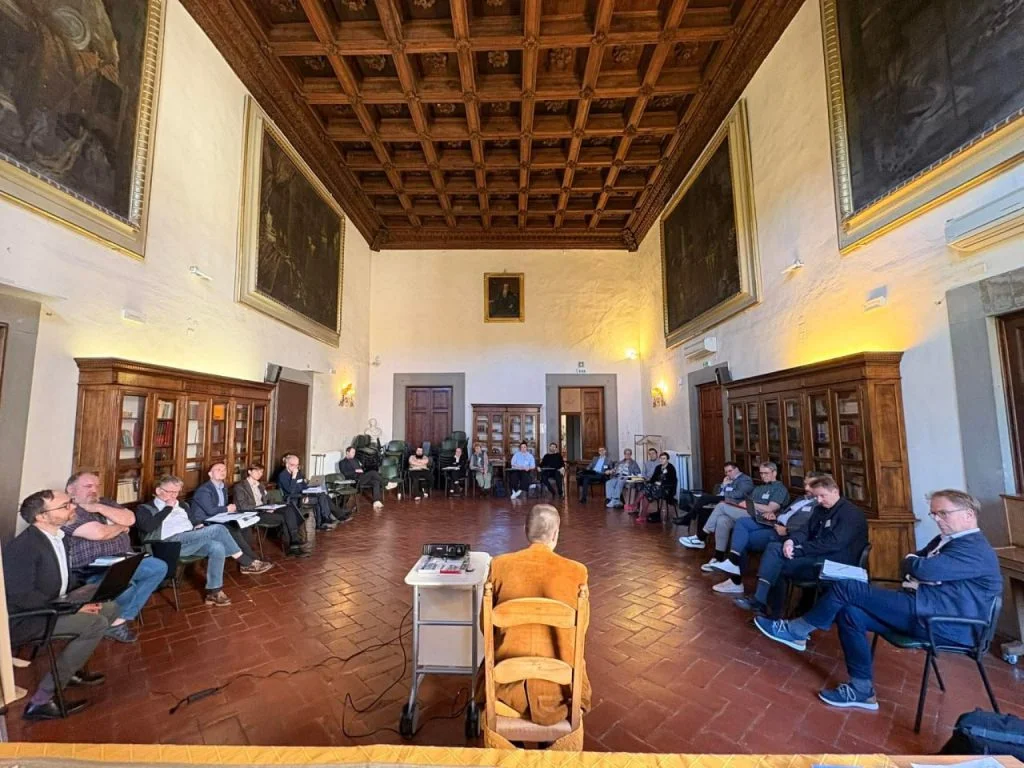
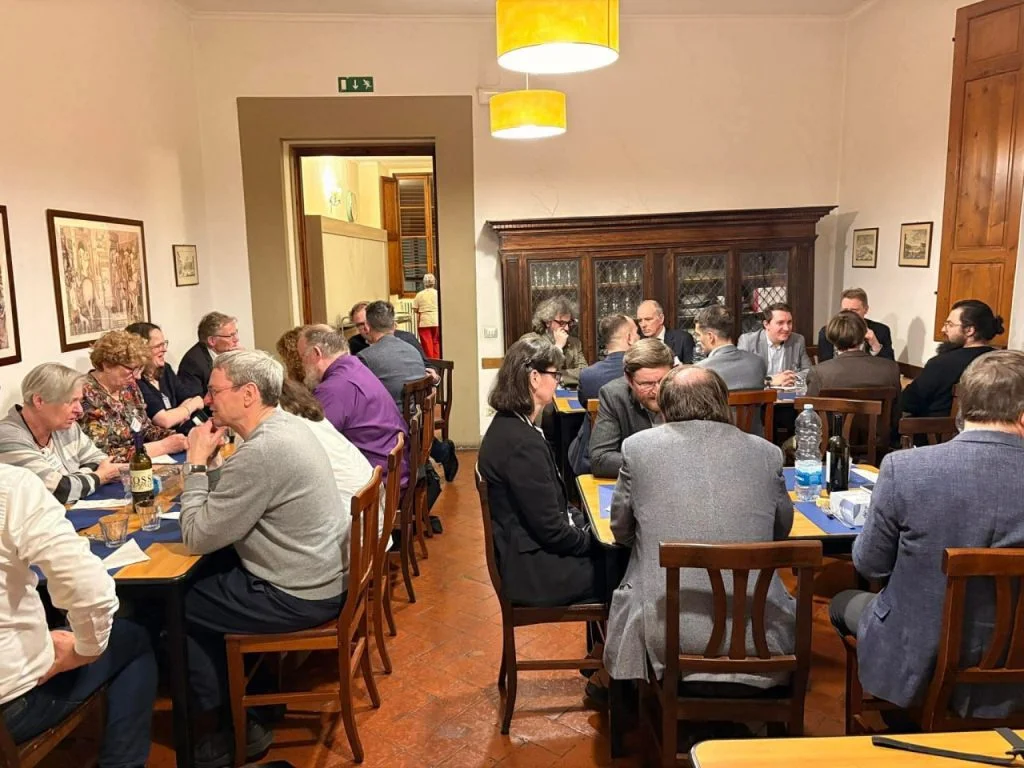
On 16–19 March, a conference of the Community of Protestant Churches in Europe took place in Florence, addressing the theological challenges facing the Christian community today. Lutheran and Reformed communities from south-eastern Europe were represented. The German Evangelical Lutheran Church of Ukraine was represented by Pastor Dmytro Tsolin..
The event was held at the Waldensian Guest House in Florence (Foresteria Valdese di Firenze). The Waldensians emerged as a pre-Reformation movement in the late twelfth century in what is now northern Italy and later joined the Reformed tradition at the Synod of Chanforan in 1532. Participants thus had the opportunity not only to discuss contemporary theological challenges, but also to explore the history of Protestantism in Italy.
The first session was opened by a regional bishop of the Evangelical Lutheran Church in Bavaria, Thomas Prieto Peral. His presentation explored theological challenges as an unavoidable part of the Church’s life within God’s providence. How should changes in church life be understood—as enemies of faith or as invitations to deepen it? Which areas of theology need continual renewal and fresh application, and which must remain unchanged? Where is the boundary between faithfulness to Christian doctrine and liturgy and the need to respond adequately to the challenges of the age? These questions were addressed in Bishop Peral’s presentation..
One important theme was the future of Christian preaching and spirituality. “The Church of the future must become spiritually deeper, not simply more flexible in its structures,” the Bishop emphasised. A variety of social programmes, financial and administrative reforms and vigorous outward activity cannot replace a deeper spiritual life and an emphasis on a personal encounter with Christ. Despite society’s apparent indifference to spiritual questions, people look to the Church for forms of Christian life “in which God is not merely discussed, but encountered”.
“A Church in which people learn to recognise God’s presence in their lives… A Church in which Holy Scripture is not only analysed, but heard. A Church in which pastors, ministers and staff are not instructors in religion, but spiritual companions”—this is Bishop Peral’s vision of a theological response to contemporary challenges.
The next speaker was Pastor Patrick Todjeras from Austria, who heads the Werk für Evangelisation und Gemeindeaufbau (Organisation for Evangelism and Congregational Development). His presentation also considered what may change and what must endure in church life and practice, and the mistakes made in trying to draw society’s attention to Christianity and the Church. Pastor Todjeras described two kinds of change in response to external challenges: fast and slow. The first are spontaneous responses to urgent problems; the second emerge from thoughtful, measured and careful development in theology and church practice. It is important that neither type of change takes the place properly belonging to the other.
Discussing areas where different degrees of change are possible, he proposed a pyramid. At its summit are the Constitutiva—the unchanging foundations of faith: Word and Sacraments, Christ alone, grace alone, faith alone and Scripture alone. Below are the Vitalia, areas allowing variation, such as communal and personal spiritual life and worship. Below these are the Adiaphora: means of making worship understandable, church structures more flexible and preaching more effective.
Pastor Todjeras offered thought-provoking reflections on the “temptations” facing church life amid growing indifference to religion in general and Christianity in particular. The first is the “trap of lament”: complaining about other people’s indifference and portraying ourselves as “the last faithful people on earth” or “sufferers for the faith”. This leads communities to turn inward and decline, overlooking the fact that “Jesus is alive” and His Spirit is at work. The second is the “structural trap”: trying to revitalise church life through energetic institutional reform. Yet “structure follows strategy”, “form follows function”, and organisational change follows the Spirit, not the other way round. The third is the “explanation trap”, in which we try to explain the present situation instead of seeking a way forward.
Conversations with Waldensian pastors were an important part of the conference. This church community, now within the Reformed tradition, has travelled a difficult historical path over more than eight centuries, enduring severe persecution by both the Roman Catholic Church and political authorities. One need only recall John Milton’s sonnet “On the Late Massacre in Piedmont” of 1655. Pastor William Jourdan offered a profound theological reflection on the Waldensian Church’s contemporary challenges. How can a community whose theology developed in opposition to Catholicism shape its mission in a world where that opposition no longer exists? How can it develop a strategy for proclaiming the Gospel in a society where religious debates are no longer central? How can it find its place in the new realities of church life?
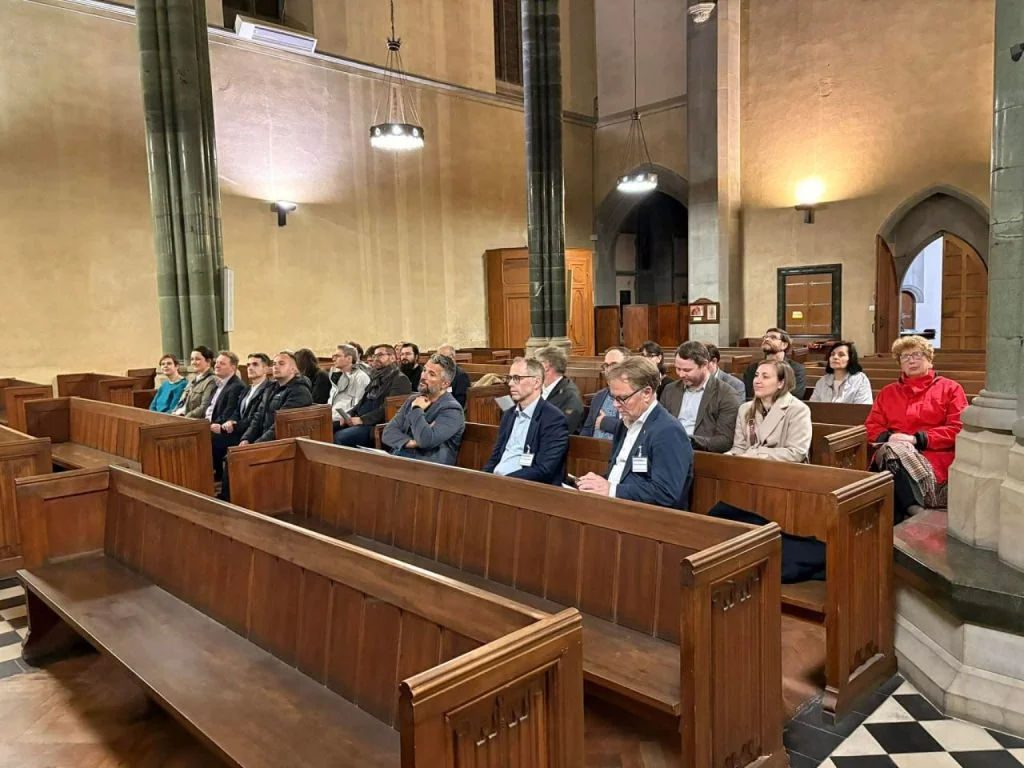
The war in Ukraine and its theological challenges drew particular interest. Pastor Dmytro Tsolin’s presentation, “Ukraine Today: Existential and Theological Challenges in the Fifth Year of War”, had a dedicated place in the programme. Participants listened with sincere interest to his account of Ukrainian society’s current experience: loss, moral and existential difficulties, and the churches’ efforts to respond, including those of the German Evangelical Lutheran Church of Ukraine.
The presentation focused on theological responses to urgent questions raised by the war and on public theology as the presence of the Gospel in different areas of public discourse. Exploring existential resilience, Pastor Tsolin introduced contemporary Ukrainian reflection on theodicy through Artur Dron’s book Hemingway Knows Nothing, which offers important reflections on God and war. He also addressed key challenges in developing public theology: caution against presenting theology as merely another social science, an emphasis on theology as the human encounter with God, and the need to cultivate a public desire for theological reflection.
All participants expressed strong support for Ukraine and asked many questions. In turn, Pastor Tsolin thanked the Protestant church representatives for their continuing practical support.
Participants also joined round tables, group discussions and other forms of reflection on contemporary theological challenges.
Read Dmytro Tsolin’s presentation here: “Ukraine Today: Existential and Theological Challenges in the Fifth Year of War”
Dmytro Tsolin, GELCU Pastor