
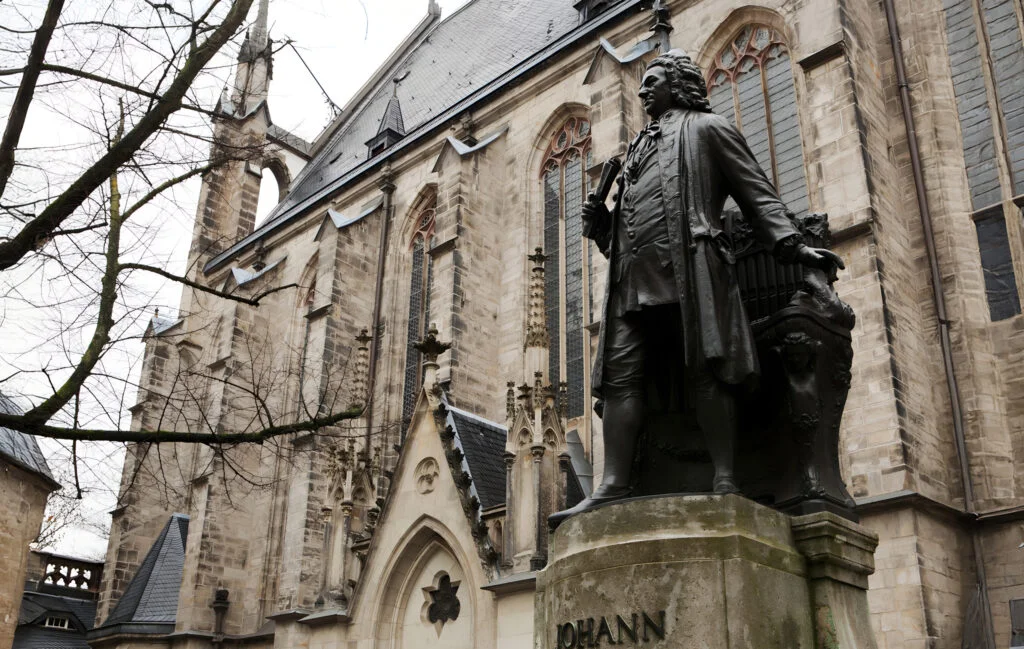
Without Bach, the world of music would probably not look as it does today. He raised the art of church music to previously unknown heights.
For any musician, Bach’s works form a foundation from which everything we call true musical art grows. He made church music one of its jewels, giving it forms that listeners could readily appreciate. His fugues helped turn the organ from a church instrument into a concert instrument. His famous D minor fugue is an outstanding example of organ music.
“Anyone who loves the organ is a little bit Lutheran.”
Johann Wolfgang von Goethe
As a Lutheran, Bach developed and systematised music for Lutheran worship, composing numerous cantatas, chorales and oratorios. His two hundred church cantatas for Lutheran services are only a small part of his output. One of the best known, “Wake, Awake, for Night Is Flying”, is based on a Lutheran chorale. Bach frequently took chorales as the basis for his complex polyphonic compositions, such as The Musical Offering.
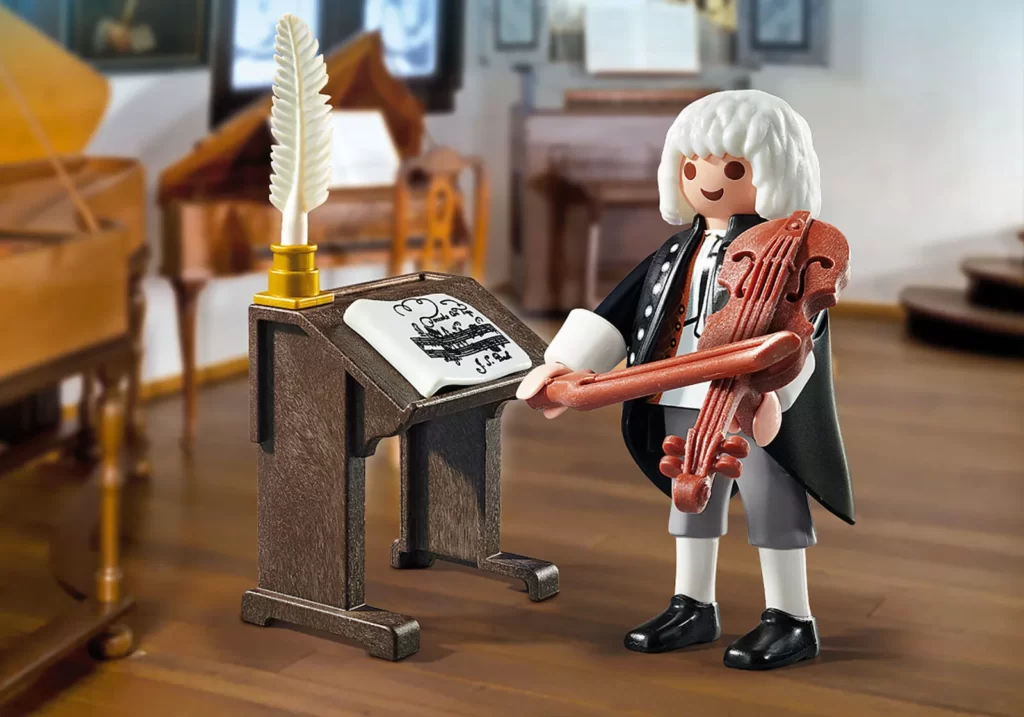
Johann Sebastian Bach was born on 21 March 1685 in Eisenach, into a Lutheran family. His parents were musicians, but both died when he was only ten. His elder brother therefore took responsibility for his upbringing, teaching him keyboard and organ.
At eighteen, Bach was already working as a court organist and concertmaster in Weimar. In 1717, he became Kapellmeister to Prince Leopold of Anhalt-Köthen. There he composed the Brandenburg Concertos and the English and French Suites.
At that time, communicating the pure Gospel to congregations was central to the Church’s task. Music could do so with particular vividness and emotional force. Bach fulfilled this calling. His major works, the St Matthew Passion and St John Passion, are filled with emotion, drama and profound spirituality: musical retellings of the Gospel account of Christ’s suffering. The St Matthew Passion was translated into Ukrainian by Tetiana Ostrovska, and this version was performed at the Kyiv Opera in the 2000s.
From 1723 until the end of his life, Bach served as cantor at St Thomas’ Church in Leipzig. Here he composed music for Sunday services, liturgies and festivals, including the Mass in B minor. Some of his chorales draw on traditional Lutheran hymns. For example, the melody of Luther’s “A Mighty Fortress Is Our God” appears in many of the composer’s works. Bach believed his music embodied his love for God and his service to him. Many of his manuscripts bear the words Soli Deo Gloria—“To God alone be the glory”.
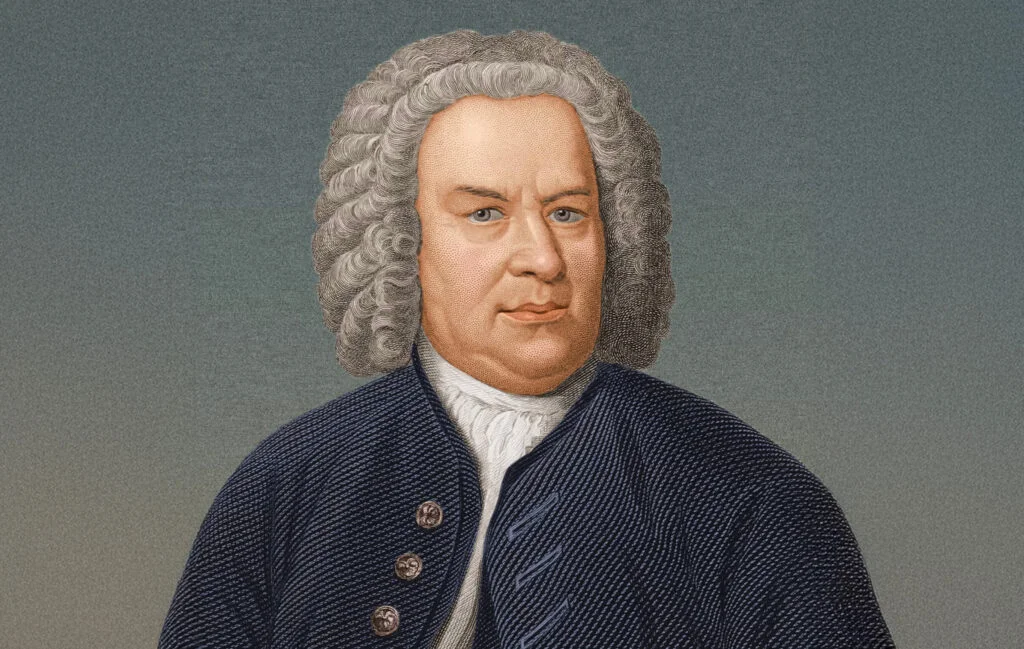
The great composer died in Leipzig on 28 July 1750 after an unsuccessful eye operation.
The treasured collection of a thousand musical compositions he created reflects a life devoted to and inspired by God, and a profound understanding of vocation and service.
The seriousness of his character and musical legacy did not exclude a lively, joyful and optimistic approach to life. His playful Coffee Cantata, filled with happy anticipation and touches of humour, is a fine example—and an enjoyable accompaniment to a morning cappuccino.
“Oh, how dearly I desire coffee,
J. S. Bach, Coffee Cantata (1732–1734), excerpt.
Sweet as kisses,
And more delicate than muscat wine.
Coffee, coffee, coffee is what I crave;
I shall be grateful without end
As soon as I smell that aroma!”
English rendering of the Ukrainian translation by Maksym Strikha.