

Introduction
On 5 February 1705, Lutheran pastor, Berlin provost (1), doctor of theology and mystic Philipp Jakob Spener, known as the founder of Pietism (2) in the Evangelical Lutheran Church in the German lands, fell asleep in the hope of resurrection with the Lord.
Like many major church figures at the origins of a tradition or movement, Spener differed from his earliest disciples, and still more from later followers. Even Martin Luther cannot be called a “Lutheran” in the contemporary, twenty-first-century sense. John Calvin would not have shared the Zwinglian views of the sacraments that sometimes dominate modern Reformed and Presbyterian churches. Jacobus Arminius would have condemned the understanding of human sinfulness taught by many modern Arminians. The same applies to Spener, who was not a Pietist in the fullest sense. In church history, especially Lutheran history, Pietism has often been viewed negatively, particularly by confessional Lutheran theologians and historians. It is therefore worth stressing that Spener was not a radical. His theology of piety differed from the legalism, separatism and subjectivism of later Pietists, including Francke; from Anglo-Scottish Puritan moralism; and from the doctrine of entire sanctification taught by the Wesley brothers and early Methodists. He nevertheless allowed that Christians could attain a high degree of piety, perhaps even cease committing deliberate sins arising from the heart.
He remained faithful to Reformation theology and the Lutheran symbolic (3) books, particularly justification by faith and the saving efficacy of the sacraments, especially Holy Baptism. He was troubled by the spiritual condition of Lutheran clergy and parishes in Germany.
In the age of Lutheran orthodoxy, the pulpit had become a place for teaching academic theological theories developed in universities through a combination of philosophy, biblical knowledge and vigorous criticism of Rome, the Reformed churches and Anabaptist movements. This was the setting in which Spener began his education and ministry.
Biographical Outline
Born into a lawyer’s family, he entered the philosophy faculty of Strasbourg University in 1648. He later interrupted his studies and continued his education under Joachim Stoll, the family’s court preacher, whose circle included followers of the German Lutheran theologian and mystic Johann Arndt (4). In 1651, Spener returned to Strasbourg. In 1653, he defended a master’s thesis in philosophy on the likeness of the rational creature to the Creator, largely directed against Thomas Hobbes and certain defenders of his writings. After completing his master’s degree, he pursued historical studies under Johann Heinrich Boeckler.
The following year, he began theological studies at Strasbourg under Sebastian Schmidt and Johann Dannhauer. He completed them in 1659, then studied Hebrew for a year under Johann Buxtorf in Basel. In 1663, he was commissioned to preach without pastoral responsibilities. The following year, he earned his doctorate in theology with a dissertation on “Mohammedanism Foreshadowed in the Euphratean Angels of Revelation 9:13 and Following”. This revealed his distinctive eschatological outlook, a form of historical realism linking Revelation’s symbolism to historical reality, although he remained sceptical of a literal thousand-year kingdom. On 20 July 1666, church authorities appointed him senior pastor of the Predigerministerium in the Free Imperial City of Frankfurt am Main. Four years later, he established the Frankfurt collegium pietatis. His early formation among Arndt’s followers became evident in 1674 when he republished True Christianity in Four Books, followed the next year by a preface to a new edition of Arndt’s Postil, a collection of Gospel sermons. That same year, he published his celebrated Pia Desideria oder Hertzliches Verlangen nach gottgefälliger Besserung der wahren evangelischen Kirche, sampt einigen dahin einfältig abzweckenden christlichen Vorschlägen (Pious Desires, or a Heartfelt Desire for a God-Pleasing Reform of the True Evangelical Church, Together with Some Simple Christian Proposals). The work became extraordinarily popular and widely discussed. Spener argued that philosophical and theological debate should not occupy the central place in Christian religious life. Piety, sincerity of heart and spiritual experience should come first. For the orthodoxy and rationalism of his time, these were revolutionary ideas.
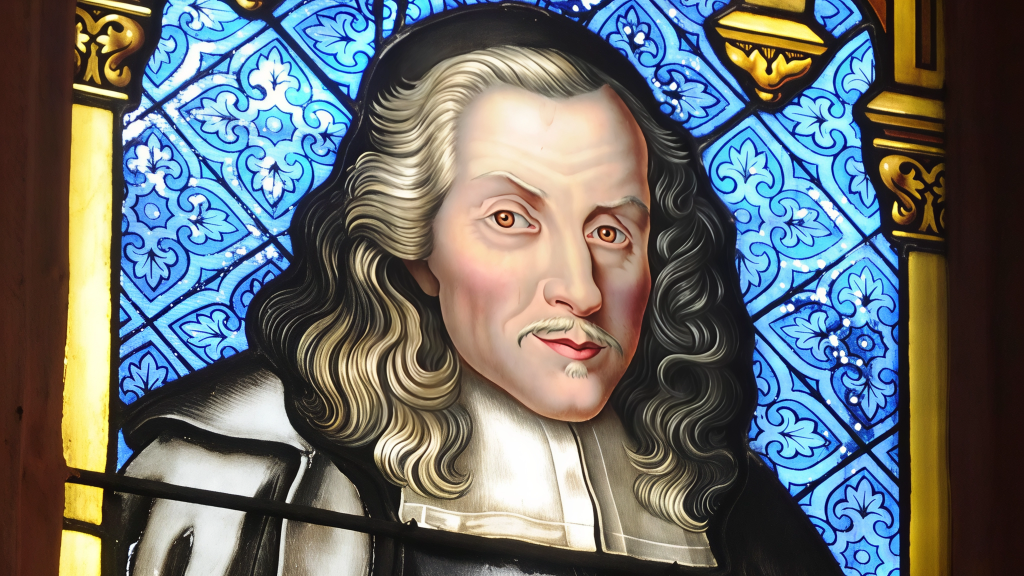
From around 1670, a circle sympathetic to Spener’s spiritual ideas gathered around him, known as a collegium pietatis. They met regularly in private homes, read Scripture together and sought a personal, deeper understanding of what God was saying to each believer’s heart. His approach quickly gained popularity beyond Lutheranism, influencing other Protestant churches and even Catholic circles. These gatherings were called Bibelstunde, “Bible hour”, and consequently came to be known simply as Stunde in Germany. The word later entered Ukrainian, but its meaning changed: “Shtunda” or “Shtundists” became a frequently disparaging and imprecise label for various movements arising within Orthodox settings under Protestant influence.
Pietist practices spread rapidly among Lutheran congregations, causing concern among church leaders. Calls to renew church life according to the pattern of early Christianity grew more frequent. Some Pietist communities eventually separated from Lutheranism, but most remained within the Evangelical Lutheran churches, becoming a powerful movement of spiritual renewal.
In 1682, the Saalhof Pietists separated from Spener’s congregation. This was the first serious challenge to his pastoral leadership and helped shape his own confessional strategy.
In July 1686, Spener was appointed senior court preacher to Elector Johann Georg III of Saxony in Dresden, reflecting the esteem and trust he enjoyed among Lutheran leaders. In spring 1687, he first met August Hermann Francke, beginning many years of spiritual cooperation that influenced Pietist communities.
February 1689 brought conflict with Elector Johann Georg III. In June 1691, Spener became provost and consistorial councillor at St Nicholas’ Church in Berlin, where he could pursue his pastoral and theological ideas more independently.
In 1693, he became involved in controversy over chiliasm, the idea of a thousand-year kingdom. The Berlin confessional and theological dispute of 1697–1698 was the last major controversy in his career.
In 1698–1699, towards the end of his life, he deliberately withdrew from controversy and concentrated on publishing his writings as Theologische Bedencken, seeking to systematise his theological reflections.
Spener died in Berlin on 5 February 1705 and was buried in the cemetery of St Nicholas’ Church. He left a substantial spiritual and literary legacy that influenced Lutheran orthodoxy and early Pietism.
The Historical and Theological Context
Spener began his ministry towards the end of the era of Lutheran orthodoxy, spanning the late sixteenth to early eighteenth centuries, and became one of the key figures marking its conclusion. After the death of Martin Luther, whom the Formula of Concord identifies as the foremost theologian of the Augsburg Confession, the Evangelical churches faced circumstances resembling those of the early Church after the apostles. A powerful personal theological authority capable of balancing disputes was gone, and many unresolved questions of doctrine and church practice emerged.
The Evangelical Lutheran Church faced several serious challenges. First, most traditional bishops in the German lands did not support it: many remained loyal to Rome and accepted neither Luther’s reforms nor the Augsburg Confession.
Second, Reformed congregations and Anabaptist movements were spreading. Reformed Christianity took root in Switzerland and the Rhineland; some principalities and cities formerly supporting Lutheranism adopted new confessional positions, changing their teaching on Baptism, the Eucharist and divine predestination. Radical Anabaptist movements also spread in some regions.

Third, the Counter-Reformation actively sought to return cities and territories that had embraced the Evangelical faith to papal influence. Fourth, many theological questions remained disputed within Lutheranism itself: the third use of the Law, Confession’s status as a sacrament and the treatment of consecrated Eucharistic elements outside their liturgical use. In this complex setting, Philipp Melanchthon, often considered the foremost theologian after Luther, sought theological compromise with the Reformed through concessions in Eucharistic theology, while also seeking understanding with Catholics. His approach to human cooperation in faith, known as synergism, provoked prolonged controversy. Some saw a dangerous move towards a doctrine of merit; others argued that it concerned the language of faith’s relationship rather than cooperation in salvation in the classical theological sense.
These tensions were intensified by the Thirty Years’ War, which devastated the German lands and deepened confessional divisions. Lutheran orthodoxy developed in this atmosphere as an effort to define and defend church teaching against Roman Catholic polemic, covert Reformed proselytism and the radicalism of various movements. Lutheran theologians increasingly used scholastic method, logical systematisation and philosophical tools to formulate and defend doctrine precisely.
This era gave the Evangelical Lutheran Church theological clarity, faithfulness to its confessional books and careful doctrinal development. Yet the danger of formalising faith also grew: emphasis on orthodoxy sometimes outweighed attention to personal spiritual life and pastoral care. A pastor might explain the differences between Lutheran, Calvinist and Anabaptist understandings of the Eucharist perfectly while giving too little attention to believers’ inner lives and Christian piety.
Spener was deeply concerned by this spiritual condition. His ministry responded less to a lack of correct doctrinal formulations than to a weakening of Christian life, which he believed should flow from the Gospel as naturally as light from fire. This was the context and cause of Pietism’s emergence.
Professor Bengt Hägglund, the Swedish Lutheran historian of theology, rightly identifies an error made by many church historians and confessional theologians:
“The contrast between orthodoxy and Pietism is often presented as a contrast between doctrine and life. Although this is misleading and scarcely conveys the actual differences, it contains some truth, since Pietism gives greater attention to sanctified life as evidence of true faith. This accords with orthodox Lutheran teaching, but a new feature appears in the negative attitude towards worldly life. Dying to the world must also mean withdrawing from worldly pleasures and entertainments. Spener did not believe Christians could achieve perfection in this life, but allowed that some might become free of all deliberate sins. Generally, the Pietist outlook leads to a more or less dual ethic: Christians face higher and stricter demands than people in general.”
Spener’s theological emphases and practical directions for ministry, useful both to the Church and to personal spirituality, may be outlined as follows:
Faithfulness to the Holy Gospel. Spener unquestionably confessed and taught that justification, or salvation, comes through faith alone (sola fide) in Jesus Christ’s sacrifice, independently of good works or public displays of piety, through the means of grace—Word and Sacraments (sola gratia). This distinguished him from later, sometimes radical Pietists who taught that good works and social piety were necessary for salvation.
Faithfulness to the Unity of the Church. Unlike radical Pietists who called for separation from existing parishes and churches where God’s Word was rightly preached and the sacraments administered according to Christ’s institution, Spener remained faithful to the Evangelical Lutheran Church of his time, despite his dissatisfaction with the spiritual condition of its congregations and members.
Faithfulness to the Lutheran Confessional Books. Spener remained a Lutheran and deeply valued the symbolic books, particularly the Augsburg Confession as the first testimony to Evangelical faith and hope, and Luther’s Large and Small Catechisms. These were the confessional documents he most frequently cited in treatises and sermons.
New Birth and Piety. The Berlin provost emphasised personal religious experience and lived practice, giving less weight to theological knowledge. This does not mean he ignored Lutheran confessional foundations: by theological knowledge he meant theology generated in academic disputes between Lutherans, Catholics and the Reformed for the sake of further disputes. Nor did he teach that every Christian must undergo a dramatic emotional conversion or new birth separate from Baptism. He taught that Christians should live in the new birth received in Baptism and continue receiving the grace of new life through the Word and Holy Communion. The following prayers concluded sermons in his series on the new birth:
“Lord God, our Father, we thank You for the grace by which You bestow new birth upon us, granting it to us all in Baptism! Teach us to understand the greatness and power of this gift, that we may truly bless You for it and rightly undertake the self-examination discussed today [in the sermon]. Guide those who have rejected their new birth and returned to the old life into the way of truth, and grant that they may truly be born anew in Your Son. In those whose new birth is weak yet active, preserve and strengthen it, bringing it to completion until the day of Jesus Christ. Oh, when will nothing old remain in us, but only the new! You, O God, will accomplish this according to Your promise. Work within us through Jesus Christ, and may eternal glory be His, Yours and the Holy Spirit’s! Amen.” (5)
“O faithful Saviour, Jesus Christ! You placed the power of Your death and resurrection in Holy Baptism, bestowed it upon us in that sacrament and thereby granted us new birth from above. We thank You for such great grace! We humbly confess that, alas, we continually sin against the covenant of a good conscience established with us in Baptism by You and Your Father, depriving ourselves of its joy and staining our consciences. Yet Your covenant of grace is everlasting; for its sake, forgive all our sins now. That we may receive this grace, awaken sincere repentance and living faith within us through Your Spirit. Impress this covenant ever more deeply upon our souls through Your living Word, so that our whole life may draw strength from Baptism; that through the Holy Spirit we may always remember it, keep a good conscience in faith, continue in sanctification and joyfully find comfort in Your eternal grace; and finally enter the blessed inheritance of glory for which You gave us new birth! Amen.” (6)

The Objective Gives Rise to the Subjective. Spener’s mysticism is rooted in Lutheran sacramental theology. His theology of life in the new birth and social piety accorded with Lutheran teaching on the Holy Spirit and the sacraments. He taught that God’s Word and the holy sacraments are the source of the subjective experience of new birth. He encouraged frequent participation in Holy Communion as a means not only of justification but also of sanctification.
Communities of Piety. Spener established collegia pietatis: gatherings for deeper Bible study, spiritual reflection, mutual encouragement and prayer. They were to be part of parish life, not “parallel churches”. These meetings were intended to complement rather than replace the liturgy. Their communal character also limited radical subjectivism by placing personal experience and opinion within the community’s shared experience and confession.
Worship and Scripture Study at Home. He developed the idea of the domestic church. God’s Word should be heard not only in public worship from lay readers or the pastor, but also at home. Parents are responsible for catechising their children, and Christian families should pray and read Scripture together. This stands within Lutheran tradition: Luther wrote the Small Catechism precisely for this purpose, entrusting parents with teaching the foundations of faith in Christ.
The Priesthood of All Believers. Spener taught the common priesthood of all Christians without abolishing the ordered status of the pastor’s or preacher’s public ministry. He held that any Christian might teach in the parish if sufficiently knowledgeable in Scripture, gifted by the Spirit and called by God, and acting with the Church’s consent, thus preserving church order. This also applied to Confession and the exercise of the Keys: every Christian is called to apply the Word privately as both Law and Gospel, confronting a neighbour’s sin, calling to repentance, comforting and instructing. In exceptional circumstances, this could include administering Holy Communion without arbitrary action or violation of parish and church order.
Pastoral Formation and Personal Mentoring for Candidates for Ministry. Another important aspect was Spener’s understanding of theological education for those seeking public ministry as pastors or preachers. Without rejecting dogmatics or even philosophy, he believed pastoral care and practical theology should lie at its heart. Future ministers should first have a pastor’s heart and the knowledge and tools needed for spiritual guidance and proclaiming the Word; only then should they develop the ability to debate confessional differences or philosophy’s role in theology. He also believed every candidate for Word and Sacrament ministry should have a personal mentor among serving pastors.
Preaching the Word for Life, Not for Debate. For Spener, preaching should lead to repentance, strengthen faith and shape Christian life. It should proclaim the living Word, awakening or strengthening living faith and empowering a life of piety. The pulpit should not become a platform for theological polemics against Roman Catholics or the German Reformed. This principle remains relevant: seminary courses in rhetoric and homiletics commonly warn against criticising others from the pulpit.
Which of Spener’s views or practices should contemporary Lutherans question? These brief notes suggest three matters concerning eschatology and ecumenical relations:
- The conversion of the entire Jewish people to Christianity;
- The fall of the Roman Church, especially the papacy;
- Eschatological historicism.
The early Church also lived in expectation of Christ’s imminent return. Yet we should not try to identify end-time events in current affairs. It is better always to be ready to meet the Lord, as taught in the parables of the Ten Virgins, the Talents, and the Faithful and Unfaithful Servant (Matthew 24–25).

Spener did not formally contradict Article XVII of the Augsburg Confession, since he was sceptical of a literal thousand-year kingdom. He did not teach crude political chiliasm, but allowed for a historical period of exceptional flourishing for the Church before the world’s end, going beyond the strict eschatological restraint of orthodox Lutheran theologians.
We Lutherans need to know our history well, in all its diversity, tensions and depth. Our tradition is not limited to Luther or the symbolic books. It includes different spiritual and theological currents, from confessional and orthodox theologians to Pietists and other movements, each seeking faithfulness to the Gospel in particular historical circumstances. This knowledge helps us understand ourselves, avoid simplistic accounts and recognise that living faith has always sought both fidelity to doctrine and renewal of Christian life.
The history of Lutheran Pietism is also deeply relevant to Christians of other traditions. The Pietist awakenings of Central and Eastern Europe helped give rise to Ukrainian Shtundism, one source of later Protestant communities in our lands: Baptists, Evangelical Christians, Sabbatarian groups and later Adventists, among others. Exploring Pietism is therefore not merely an internal Lutheran matter, but part of the wider history of Protestant Christianity in Ukraine.
Sources and Further Reading:
- Shepetiak, O. M. History of Religions. Volume 3. Zhovkva: Misioner, 2020.
- Bengt Hägglund. History of Theology. Saint Louis, Missouri: Concordia Publishing. House, 1968.
- Roger E. Olson. The Story of Christian Theology: Twenty Centuries of Tradition & Reform.Downers Grove, Illinois: InterVarsity Press, 1999.
Vladyslav Fediuk,
Lecturer in Church History and Theology at Tavria Christian Institute; member of St Martin of Tours Evangelical Lutheran Congregation, Kyiv.
(1)A provost is a senior pastor or church official in Evangelical Lutheran churches and other Protestant traditions, responsible for pastoral oversight of a group of parishes and clergy within a region. Combining pastoral and administrative duties, the provost supports pastors and preachers and maintains church order and discipline. Some Lutheran churches use the title dean. A provost should be distinguished from a superintendent or bishop, who leads a church province, while the provost oversees a smaller area within it.
(2)Pietism, from the Latin pietas, meaning devotion or piety, was a seventeenth- and eighteenth-century Lutheran movement emphasising personal devotion and spiritual life over formal observance. It encouraged regular Bible reading, prayer and moral growth in daily life. Pietists sought to revive living faith and often formed small groups, collegia pietatis, for shared spiritual practice. The movement criticised formalism and dogmatism in orthodox church life and encouraged believers’ active involvement in their spiritual growth. Pietism significantly influenced education, charitable initiatives and Protestant spirituality in Europe and the colonies.
(3)The Lutheran confessional documents collected in the Book of Concord (1580) are called “symbolic” not in the sense of being merely nominal or formal, but as symbols or confessions of faith bearing witness to the Church’s true teaching.
(4)Johann Arndt was a German Lutheran theologian and religious mystic who valued monastic writings and spirituality, including Thomas à Kempis and Bernard of Clairvaux. He emphasised inward devotion, personal experience of faith and Christian spiritual life, strongly influencing German Pietism. His best-known work, Vier Bücher vom wahren Christentum (Four Books on True Christianity), became a companion for generations of believers. He also called for ethical life and prayer to be joined with active service to one’s neighbour, giving his theology a practical character.
(5)From the sermon “On Baptism as the Means of New Birth”; emphasis added by the author.
(6)From the sermon “On the Necessity of New Birth”; emphasis added by the author.